
The end of the war will not change the character of Russia
The war of aggression in Ukraine has reduced Russia’s influence. It has also made Russia’s imperialistic and authoritarian character increasingly conspicuous.
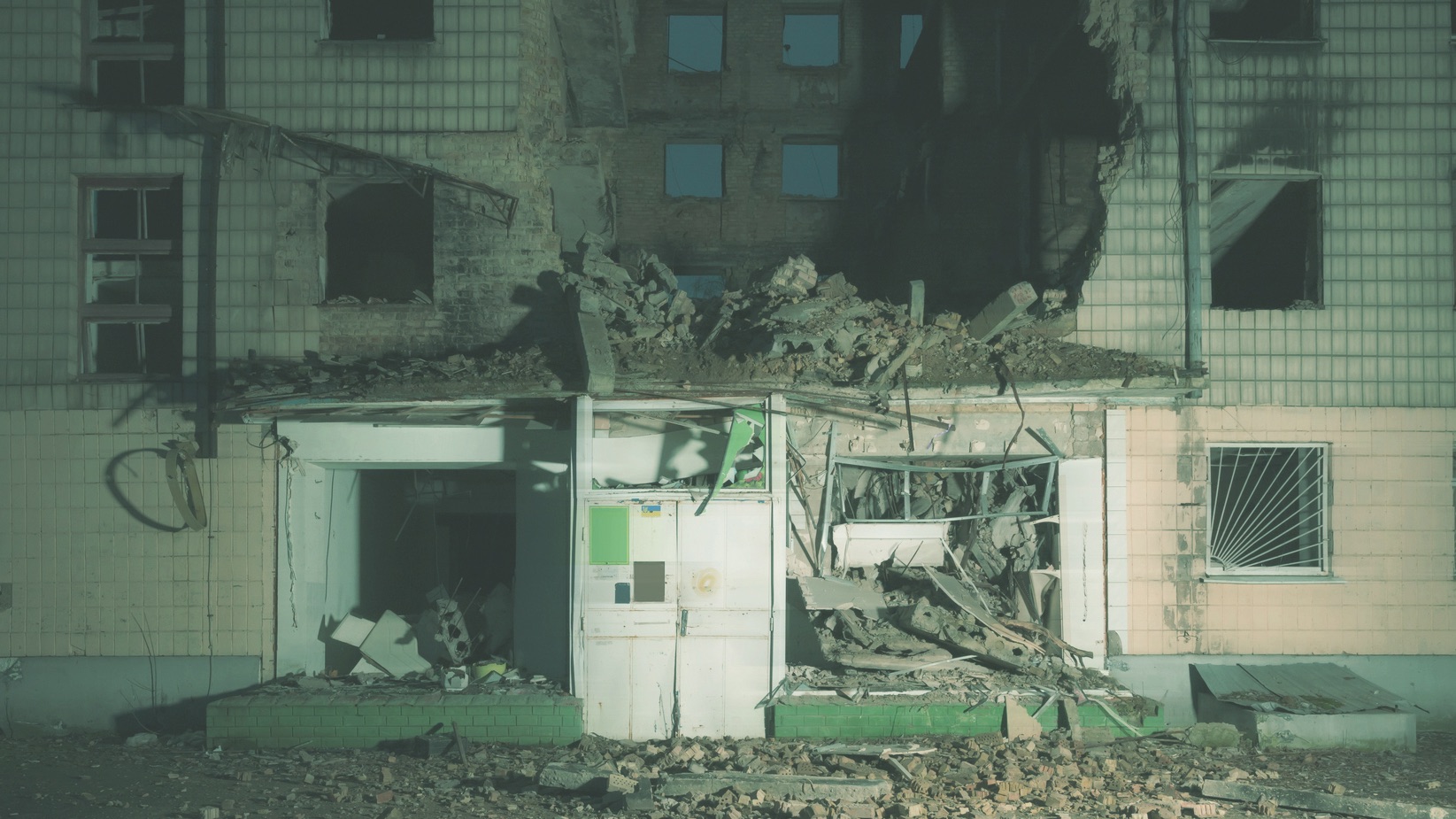
Four years of war of aggression have left a deep mark on Russian society. The impacts of warfare are reflected in the internal situation of society, the economy and Russia’s diminished international influence. Furthermore, the war has strengthened Russia’s traditional imperialistic characteristics.
According to the Russian world view, in essence, Russia sees itself as a superpower. The perception of Russia being an insulted and betrayed superpower under threat is deeply rooted in Russian society and the state's operating logic. Russia believes that, as a great power, it must have a regional buffer zone and, as a state, more extensive rights than others. It seeks to become a superpower because it believes it is entitled to do so, but also because, from the Russian perspective, the world is a threatening and challenging place. Russia’s perception of itself affects the way it acts towards other countries.
Even if the war of aggression in Ukraine were to cease for a while or end, it will not change Russia’s long-term ambitions for a superpower status or its endeavours to control Ukraine. President Vladimir Putin is personally committed to his goals in Ukraine and is not prepared to give up on them. Putin wants to return Ukraine to Russia’s sphere of interest and place a pro-Russia regime in Kyiv. He wants to detach Ukraine from the Western sphere of influence and to keep it outside both NATO and the EU.
Although Russia’s strategic goals for reaching a superpower status are long-standing and permanent, the war has weakened the ability of the Russian government to plan its operations in the long term. Decisions on both internal and external policy and the economy are made from the point of view of current, immediate needs, regardless of the fact that some of them are likely to weaken Russia’s scope for action and the achievement of long-term strategic objectives in the future.
Russia has tightened its grip on society
The war of aggression has been a demanding stress test for Russian society and government. So far, society has remained stable and adapted to the prevailing situation, but uncertainty about future prospects has increased throughout society.
During the war, the central government has tightened its control of society, and the Federal Security Service FSB has expanded its role in different areas of society. Ever stronger central government steering is exercised over the contents of the media, culture and education.
The transformation of the digital space strengthens control and partly also enables it. The government is increasingly interfering in citizens’ private lives by restricting the use of foreign social media applications and introducing its own communication tools, enabling the authorities to collect extensive information on citizens’ behaviour and attitudes.
The suppression of dissidence has accelerated during the war. Any cooperation with countries listed as unfriendly, Ukraine in particular, will be examined with a magnifying glass. Today, the persecution of political opposition extends even beyond national borders. In the absence of precise instructions, the authorities seek to please the state leadership. This means that any parties criticising those in power can easily end up being subjected to oppressive measures even without explicit orders. Therefore, persons with adequate contacts with the authorities can remove people hindering them from achieving their goals, using criminal investigations – allegations of corruption in particular – as a tool.
Increasing control and suppression of dissidence are supported by ideology. The content of instruction from day-care centres to universities follows the selected conception of history, provides justification for Russia’s superpower ambition and promotes patriotism.
War veterans returning from the front to society is one of the challenges the war inflicts on the Russian government and internal stability. The volume of serious crimes is increasing dramatically in Russia, and war veterans are one of the reasons for this. Citizens are concerned about the unrest caused by the veterans, which makes it even more difficult for them to reintegrate into society and increases the risk of their marginalisation. On the one hand, the government must be able to supervise the veterans in order to, for example, prevent political turmoil. On the other hand, it must also be able to provide veterans with support and services in spite of the deteriorating economic situation.
Russia’s global influence has deteriorated
For the Russian government, the economy is a tool for achieving its goals. In recent years, the economy has been harnessed to support the warfare in Ukraine. The sanctions imposed by the Western countries are taking their toll, which is why Russia is making every effort to circumvent them. Russia is trying to have the sanctions lifted or, at the very least, to prevent new sanctions from being imposed.
The sanctions have forced Russia to seek new markets in the Global South. China is the largest enabler of warfare for Russia due to both technology imports and energy export revenues. The war has made the relationship between the countries closer and increased Russia’s dependence on China. The situation is partly forced by circumstances, as the relations with the West have cooled, but it is also partly a question of a change that had already begun earlier but has now been accelerated by the war and the sanctions imposed by the West. As Russia’s contacts with the West have waned and it has detached itself from interdependencies, this has diminished the leverage of Russian influencing activities. In its economically weakened state, Russia is not as interesting a partner as before. The economic situation sets boundaries for, among other things, Russian efforts to increase its influence in Africa, as its opportunities to make investments, for example, are limited.
However, Russia is not isolated. In terms of its foreign policy, it has the capacity to appeal to states and audiences in the Global South. This means cooperation, trade, diplomatic support – and thus operating conditions for the current Russian administration. Since Western countries have reduced their presence in Africa, among others, Russia would be more than willing to fill the power vacuum. On the other hand, China shares the same objectives and has significantly more resources at its disposal.
While Russia has been able to wage a long-term war of attrition in Ukraine and has demonstrated its readiness to use military force regionally, the war has weakened Russia’s credibility as an ally. Russia’s reliability as a supplier of war material is crumbling, as the country needs all the materiel for warfare in Ukraine. In addition, Russia has failed to guarantee the positions of the regimes it supports, as in case of Syria, or to fulfil its promises of security guarantees, as in case of Armenia, as state resources are focused on Ukraine.
"Even if the war of aggression in Ukraine were to cease for a while or end, it will not change Russia’s long-term ambitions for a superpower status.”
Russia wants to restore relations with the West after the war
The war of aggression has changed the relations between Russia and Finland rapidly and fundamentally. Finland reacted to the aggression both with countries belonging to its Western reference group and through its own measures. They are aimed at forcing Russia to stop its invasion and at strengthening Finland’s national security and national defence. Russia has interpreted these actions as hostile and expressed this in its information influence activities. The actions Russia has targeted against Finland have included countersanctions, takeovers of Finnish companies’ assets and changes in border control.
When the fighting in Ukraine ends, Russia is likely to try to restore its relations with the West as well as with Finland. Russia can frame the restoration of connections in such a way that Finland needs Russia for economic reasons, for example. However, the willingness to cooperate will not reverse the superpower ambitions characteristic of Russia or the confrontational stance it has taken in relation to the West. Furthermore, Russia’s claim to superpower status is not solely attributable to President Vladimir Putin; his successor is likely to continue pursuing the same line of foreign policy.
Even if there is positive development in relations, the neighbourly relationship between Russia and Finland will not return to what it was before the war of aggression. In Russia, the development of democracy and the rule of law were weak even before the war. During the war, they as well as the openness of society have taken major steps backwards, which reduces the country’s attractiveness as a partner and a destination for investment.
Restoring trust in Russia will require time and, above all, evidence that Russia has abandoned a policy that regards the sovereignty and security of its neighbours as issues of secondary importance.